Home births-what you need to know
- Amalhopebirthing

- Oct 6, 2024
- 5 min read

Every woman has a preference about the kind of birth experience that she wants. A birth experience is greatly influenced by the setting, whether that is at the hospital, a birth center or at home.
As a doula, even though the birth settings may vastly differ from each other, our role doesn’t change. We might just need to alter some aspects of care to cater more specifically to a certain birth place.
Our primary role as a doula is to serve the expectant mother and her needs. She has the right to choose what kind of birth she wants and where she wants to give birth. As a doula, we can educate her on the pros and cons of different birth places, and support her based on the birth experience she wants.
Today, we’ll focus specifically on homebirths and how a doula can prepare for doulaing at a home birth.
What's the deal with homebirths?
Women have given birth at home for thousands of years. It is only in the last century that births have occurred more at hospitals.
Did you know that the Netherlands has the highest ranking of homebirths in Europe, at around 16% of births occurring at home? In Jordan, 1% of births occur at home, while the rest of births occur in the hospital. It appears that 5% of Syrian women prefer giving birth at home than at the hospital.

There is a lot of misinformation out there about the risk of giving birth at home but countless of studies have shown that homebirths actually have fewer maternal morbidity risks than hospital births.The risk of neonatal deaths are slightly higher at 1-2 births out of 1,000, whereas hospitals show 0.4 births out of 1,000.
This is where doulas can bring evidence based information so parents can be free to choose how and where they'd like to give birth. There's no right or wrong way, but there are pros and cons to them all.
Pros and Cons
So, let’s chat a little about the pros and cons of homebirths.
Pros
it's more comfortable to be at home - you're in a familiar setting
you don’t need to pack a hospital bag,
there's no need for medical interventions or pressure from the medical care team
no worries about germ or hospital restrictions
you can set up things as you like
have uninterrupted bonding time
parents can make all the medical decisions without unneeded pressure from medical staff
you can eat and drink at your leisure,
the midwife or doula will be there for ongoing support; you won't have different nurses or doctors
there's no transition of going back home
Cons
no medical interventions and quick availability of emergencies,
don’t have trained nurses or doctors in case of emergencies,
no quick access to hospital,
would need an ambulance or transport to get to hospital if needed
Who is at risk for homebirths?
Although parents have the right to choose where they'd like to give birth, they might struggle to find a midwife if they have a high risk pregnancy.
The American College of Obstetricians and Gynocologists maintain that fetal malpresentation, multiple gestation or prior cesarean are high risks for homebirths. So according to them, home births might not be for everyone.
However, there are plenty of midwives and even obstetricians who are trained to vaginally deliver breech or multiples (like twins and triplets) at home.
Other possible disqualifications for homebirths may be:
mother is carrying twins or triplets
the baby’s position (breech, transverse)
obstetric complications (preterm labour, previous cesarean)
high risk pregnancies (maternal age, fetal abnormalities, gestational diabetes
pre-existing medical conditions (hypertention, diabetes, heart diseases, placental abnormalities)
Again, there are trained midwives who will work with expectant parents even if they may be classified as high risk. There are many positive birth stories out there of high risk pregnancy mothers who've gone on to have wonderful births at home.
What about water births?
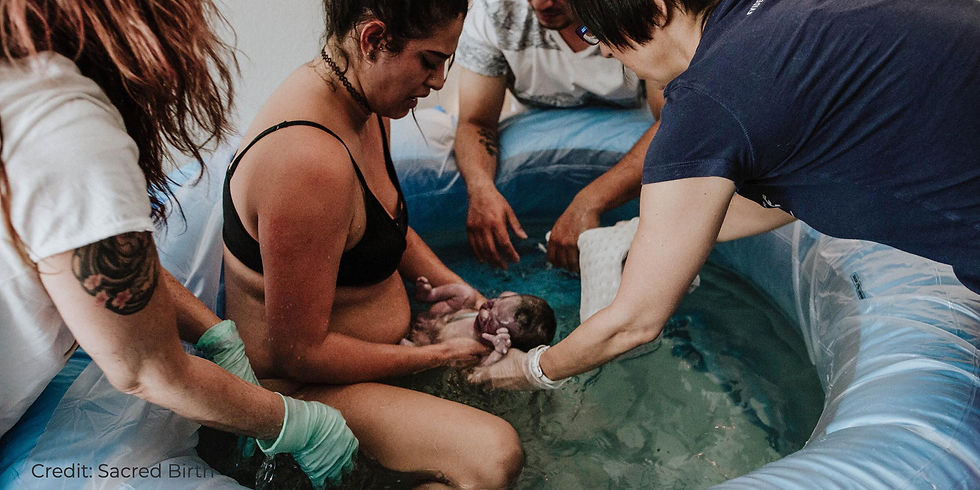
Today, many people automatically think water birth when talking about homebirths. Are they safe if some hospitals don’t allow them?
Water births have so many proven benefits, like lower pain scores, shortened labours on average and women having greater satisfaction of birth. But there are many hospitals who refuse that women give birth in water.
According to Evidence Based Birth, the barrier of water births by hospitals appear to be due to the pediatric department, and ACOG and AAP’s (American Academy of Pediatrics) apposition to it. According to them, water births have no benefits, cause infection and pose risks for newborns.
A study was done in 2022 overseeing 17,530 water births to determine the safety of water births. They found that there were fewer hemorrhages in mothers, lower postpartum transfers and fewer newborn deaths (0,28 of 1,000 water births) to (0.51 of 1,000 land births). Therefore, results appeared to show that water births had more favourable outcomes for newborns and mothers.
However, it was recommended that only women with low risk pregnancies should give birth in water. Other suggestions to reduce any kind of risk were:
hospitals should take frequent water cultures of their water to ensure its cleanliness
heating of disinfectant pipes or use new hoses
the use of fresh water and not recycled water
Most midwives don’t mind if their laboring mothers desire a water birth due to the midwifery model of care they believe in. Midwives serve by a code that sees birth as a holistic and spiritual experience.
Babies are born with something called “dive reflex” which is a natural response that prevents them from breathing until they breathe air. So, unless baby had complications during labour and birth, they will not aspire under the water. Since the midwife will provide continual care, they will be able to tell if birth needs to be out of the water.
Doulas can do well to educate parents about water birth. For example, not re-submerging baby under the water and not to yank on babies as they bring them up out of the water.
Expectant parents should also know that homebirths, if attended by properly trained midwives and knowledgeable doulas, will be a wonderful setting to birth their baby.
How your doula will help prepare for a homebirth
If you end up choosing a homebirth, your doula can help you prepare for it. Here are some things she might do:
She’ll ask to attend one or two prenatal appointments ahead of time to meet your midwife or doctor and understand her role during birth
She’ll want to visit your home and learn where you want to give birth
She'll come when you need her and stay with you the entire time
She'll help you set up the birth environment as you want it. She'll also clean everything up afterwards

What should parents prepare for a homebirth
As parents, you will also need to make sure that you prepare your home for a birth environment. Your midwife will most likely give you a list of different things you will need ahead of time. Your doula can also help you to make sure you have everything you need in order to have an uneventful birth.
Some things you might need to prepare:
a water cover protector for your mattress
plenty of snacks and drinks
a supply of ice
making sure you have enough hot water
plenty of towels
receiving blankets for baby
two big bowls
As you can see, there is quite a lot to think about if you are planning to have a homebirth. Having a doula on your birth team will definitely make it an easier load to bear.
I hope this was helpful and that you were able to take something out for the birth experience you are musing about.
Sources


Comments